
In late June, ASTM International, the body that certifies every fuel an aircraft is allowed to burn, approved methanol-to-jet as a qualified pathway for sustainable aviation fuel. The decision drew little notice outside the fuels trade press. For anyone making methanol from biomass, it is one of the most consequential clean fuel developments of the year.
The pathway, commercialized by Honeywell UOP as its eFining process, takes methanol and upgrades it into jet fuel. What matters is where the methanol can come from. It can be made from captured carbon dioxide and renewable hydrogen, or from biomass-derived syngas, the same gasification route that turns forestry residue into methanol. Honeywell puts the lifecycle emissions reduction at up to 88 percent against conventional jet fuel when the methanol is made from green hydrogen and biogenic carbon, a figure it attributes to a third-party carbon-intensity study. Until this certification, methanol could become marine fuel, a chemical feedstock, or a gasoline blendstock. It could not legally go into a commercial aircraft. Now it has a route.
A market that needs new feedstocks
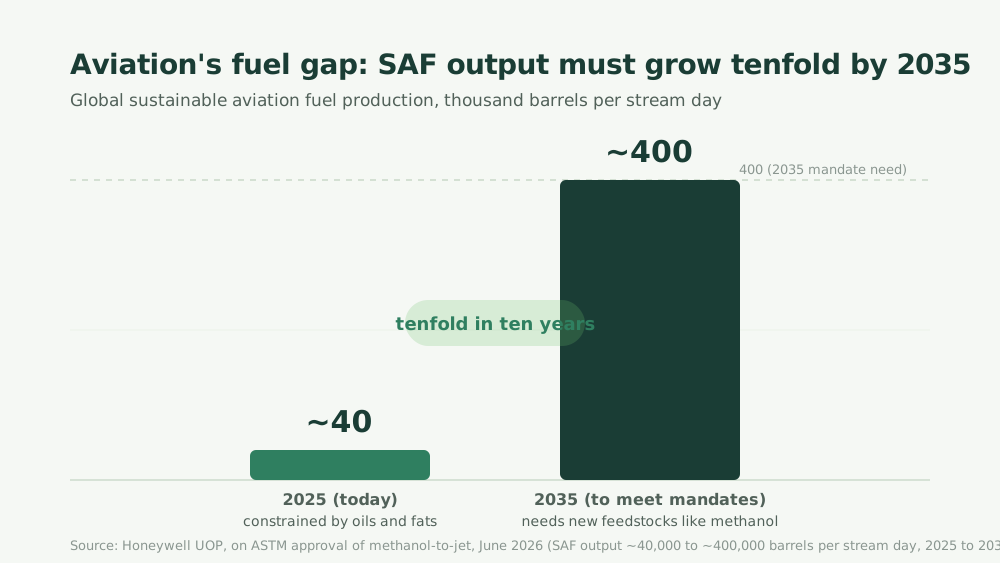
Aviation is one of the hardest sectors to decarbonize, and the fuel is the whole problem. Honeywell estimates that global SAF production has to rise from roughly 40,000 barrels per stream day in 2025 to about 400,000 by 2035 to meet the mandates now on the books, a tenfold increase in ten years. The chart above shows the gap. The catch is that most sustainable aviation fuel today is made from a narrow set of feedstocks, used cooking oil, animal fats, and vegetable oils, and there is not enough of that material in the world to close it. Every credible path to 400,000 barrels a day runs through feedstocks that can actually scale. Methanol, which can be built from biomass, captured carbon, or both, is one of the few that qualifies.
What this means for biomass methanol
Solum's methanol pillar starts with forestry residue, the slash, bark, and mill waste left over from the forest economy of British Columbia and Alberta. Gasify that residue, clean the syngas, and synthesize methanol, and the result is a liquid, storable, shippable fuel. We have written before about the markets methanol already serves, marine shipping and industry among them. The ASTM decision adds aviation to that list without changing a single step of how the methanol is made. The same molecule now reaches a market that will need roughly ten times more low-carbon fuel within a decade.
The same barrel of forestry-waste methanol that can fuel a ship can now, in principle, fuel a plane. Certification, not chemistry, was the missing piece.
The commercial signals are already arriving. Honeywell has licensed eFining to projects in Europe, to Jilin Connell in China for a facility designed to produce around 280,000 tonnes of SAF a year, and to Power2X in the Port of Rotterdam for about 250,000 tonnes a year. Argus began publishing methanol-to-jet cost indexes across nine global locations in mid-July, the kind of price transparency that tends to precede real trading. The momentum is genuine, though offtake agreements are still thin, and project economics will decide how quickly it moves from certification to volume.
Built the way it should be
A pathway into aviation strengthens the case for building these plants well, not just building them. Solum develops its biomass methanol projects with First Nations as co-owners, as a principle of how the projects are structured rather than a term negotiated at the end. Forestry residue sits on and near the traditional territories of the communities that steward these lands. A gasifier that turns that residue into a fuel now certified for aircraft is exactly the kind of long-lived, revenue-producing asset that co-ownership is built around. Aviation does not change who should own the plant. It raises what the plant is worth owning.
ASTM approvals are quiet events. They do not command attention the way a megaproject announcement does. But they redraw the map of where a fuel is allowed to go, and this map just expanded to include the aircraft overhead. For a company making methanol from the forest floor of western Canada, that is a runway worth watching.
Sources
- Honeywell, Cleared for Takeoff: How ASTM Approval of Methanol-to-Jet Accelerates SAF at Scale (June 2026).
- Global e-Fuels, ASTM Approves MtJ Production Pathway for e-SAF (June 26, 2026).
- Global e-Fuels, Argus Launches First Methanol-to-Jet Cost Indexes (July 16, 2026).
- Solum Energy, The forest is the feedstock: building a regional clean fuel industry in BC and Alberta.